We want to stay updated about what is happening in the world, and following the news can help us feel connected, be aware of topics that are important to us, and topics that may have an impact on our lives. I know I can feel out of the loop if my friends are talking about something that I haven't yet heard about.
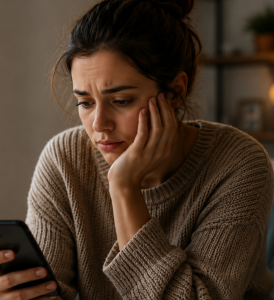
At the same time, many people that I have spoken to are noticing that the constant stream of news updates, notifications, headlines, and social media posts can feel emotionally draining. You may find yourself feeling anxious, overwhelmed, helpless, angry, or exhausted by the sheer amount of information out there.
If this resonates with you, you are not alone.
The Weight of Constant Information
One of the unique challenges of modern life is not simply the amount of news available, but the speed and volume at which it reaches us. We no longer just hear the news. We hear the news, read hundreds of comments about it, watch reactions to it, listen to debates about it, and then receive another update before we've had chance to make sense of the first one.
Alongside this, misinformation and conflicting reports can make it difficult to know what is accurate, trustworthy, or helpful. You may care deeply by trying to take it all in, as well as balancing everything else going on in your life. For many people, this creates a sense of information overload.
Why Does the News Affect Us So Much?
Our brains are naturally wired to pay attention to potential threats, which is part of our built-in survival system. Back when our ancestors faced the physical threats of predators, noticing danger around them helped to keep them safe, and to survive. Because of this, our brains tend to pay more attention to negative information than positive information, which is a phenomenon called the 'Negativity Bias'. We are more likely to notice, remember, and react to stories that feel threatening, upsetting, or alarming.
It doesn't mean that there is anything wrong with you if difficult news affects you. It means your brain is doing exactly what it was designed to do to survive.
In a modern world where there are constant stories of conflict, tragedy, uncertainty, injustice, and suffering at our fingertips, as well as algorithms working to expose us to more and more of what we interact with, it's no wonder we can feel stress and burnout with the news.
When the World Starts to Feel Hopeless
I often hear people say, "It feels like everything is bad right now" and that they have no hope for the future. When we are repeatedly exposed to negative stories, our brains can begin to build a picture of the world based primarily on what is going wrong. We may start to overlook or dismiss stories of kindness, resilience, progress, and hope, not because they don't exist, but because they often receive far less attention.
Over time, this can leave us feeling discouraged, powerless, or emotionally numb. If you've ever found yourself wondering why the world suddenly feels heavier than it used to, it may be worth reflecting on how much difficult information you are carrying each day.
When the Stress Response Gets Activated
When we read or watch distressing news, our minds and bodies may respond as though we are experiencing a threat ourselves, and our stress response may kick in (just like when our ancestors had to escape from a tiger!) ...
You might notice:
- Feeling more anxious or alert
- Increased worry or overthinking
- Difficulty sleeping
- Feeling emotionally overwhelmed
- Difficulty concentrating and brain fog
- Feeling low, helpless, or hopeless
While this response is designed to protect us, it doesn't feel pleasant, and can become exhausting when we are repeatedly exposed to distressing information without enough opportunity to rest, process, and regulate ourselves. Our nervous systems cannot keep up with the constant stream of news, and the world events are triggering our stress response over and over again.
It may be helpful to take a moment to notice what is going on for you when you are exposed to a distressing news story. Are there any changes on the way you are thinking, feeling, behaving? Are there any noticeable sensations in the body?
Caring Doesn't Have to Mean Consuming Everything
It is important to say that taking breaks from the news does not mean you don't care, are uninformed, or ignoring what is happening in the world. Many people worry that stepping back means they are somehow letting others down, missing out, or avoiding reality. But caring about something does not require constant exposure to it.
You can care deeply about world events whilst also recognising your own limits as a human being and protecting your wellbeing. In fact, stepping back occasionally may help you to stay engaged in a way that feels more sustainable.
What Can You do to Find a Healthier Balance?
There is no 'ideal' amount of news to consume, and what feels manageable will be different for everyone. However, some gentle boundaries may help:
Consider when and how you access the news...
Rather than checking headlines multiple times throughout the day, you may find that it helps to choose specific times in the day to catch up on current events. For example, some people find it useful to avoid checking the news first thing in the morning or immediately before bed, giving themselves space to start and end the day feeling more grounded.
Some find it helpful to set a timeframe for checking the news. Would an alarm help you to stick to this timeframe? Would setting some time aside after checking the news be helpful for you to process what you have discovered? Also, it may be worth thinking about how you receive notifications, would it help to have these muted, or to have a 'do not disturb' timeframe on your devices.
Choose trusted sources...
When possible, seek information from reliable and reputable sources rather than relying solely on social media. This can help reduce exposure to misinformation, speculation, and content that is designed to shock and scare us.
Check in with yourself...
Notice how you feel before, during, and after consuming news. Are you feeling informed? Or are you feeling overwhelmed?
Would speaking with a trusted friend or professional help you to process some of the feelings coming up?
Focus on what you can / have the capacity and resources to influence...
Many of the issues we read about are far bigger than any one person can solve. When feelings of helplessness arise, it can be helpful to gently bring attention back to what is within your control, being careful to try not to judge or shame ourselves for ‘doomscrolling’.
This might look like supporting a cause you care about, helping within your community, having meaningful conversations, voting, donating, or making choices that align with your values. All actions matter, this doesn't have to be a huge thing, or something that is not within your current capacities.
Make space for life beyond the headlines...
Give yourself permission to spend time doing things that bring you comfort, joy, connection, creativity, rest, and laughter. This may be spending time with people you care about, doing your hobbies, spending time in nature, listening to music, watching a favourite programme, or siting outside with a cup of tea.
It may also be helpful to focus on gratitude for the things that you appreciate in your life, or tune into a ‘good news’ media outlet to help you tune into some of the positives that are happening in the world right now.
Whatever this looks like for you, things that bring you enjoyment can help to remind you that alongside the challenges in the world, there is still beauty, connection, and goodness.
Mental health contacts:
NHS 111 (For mental health: Option 2) (UK)
Samaritans on 116 123 (UK)
Shout text support line: text SHOUT to 85258 (UK)
Bibliography:
TEDx Talks (20 Nov, 2025) Addicted or Overwhelmed? Your brain on the news. [Video]. YouTube. https://www.youtube.com/watch?v=idXpB_hfwnI
Mind (Accessed: June 25 2026). How to cope with distressing events in the news. https://www.mind.org.uk/information-support/tips-for-everyday-living/coping-with-distressing-events-in-the-news/
Change Mental Health (Accessed: June 25 2026). News consumption and your mental health. https://changemh.org/resources/news-consumption-and-your-mental-health/
Watson, J., van der Linden, S., Watson, M., & Stillwell, D. (2024). Negative online news articles are shared more to social media. Scientific Reports, 14(1), 21592. https://www.nature.com/articles/s41598-024-71263-z.pdf